

Barthel Bruyn the Elder
Biography
ContextFamous for his portraits, Barthel Bruyn the Elder was also a painter of religious subjects. The earliest traces of his work date back to the high altar of the Church of St. Nicholas in Kalkar (North Rhine-Westphalia), executed between 1505 and 1508 by Jan Joest van Kalkar (1455/60-1519) and his workshop. An apprentice since 1505, it was there that Bruyn met and befriended Joos van Cleve (1485 - c. 1540), who had a decisive influence on his style. Bruyn arrived in Cologne in 1512 and remained there for the rest of his life, holding various positions on the city council. A member of the Society of Painters in 1518 and 1521, he painted portraits of Cologne's patricians, mayors, merchants and scholars.
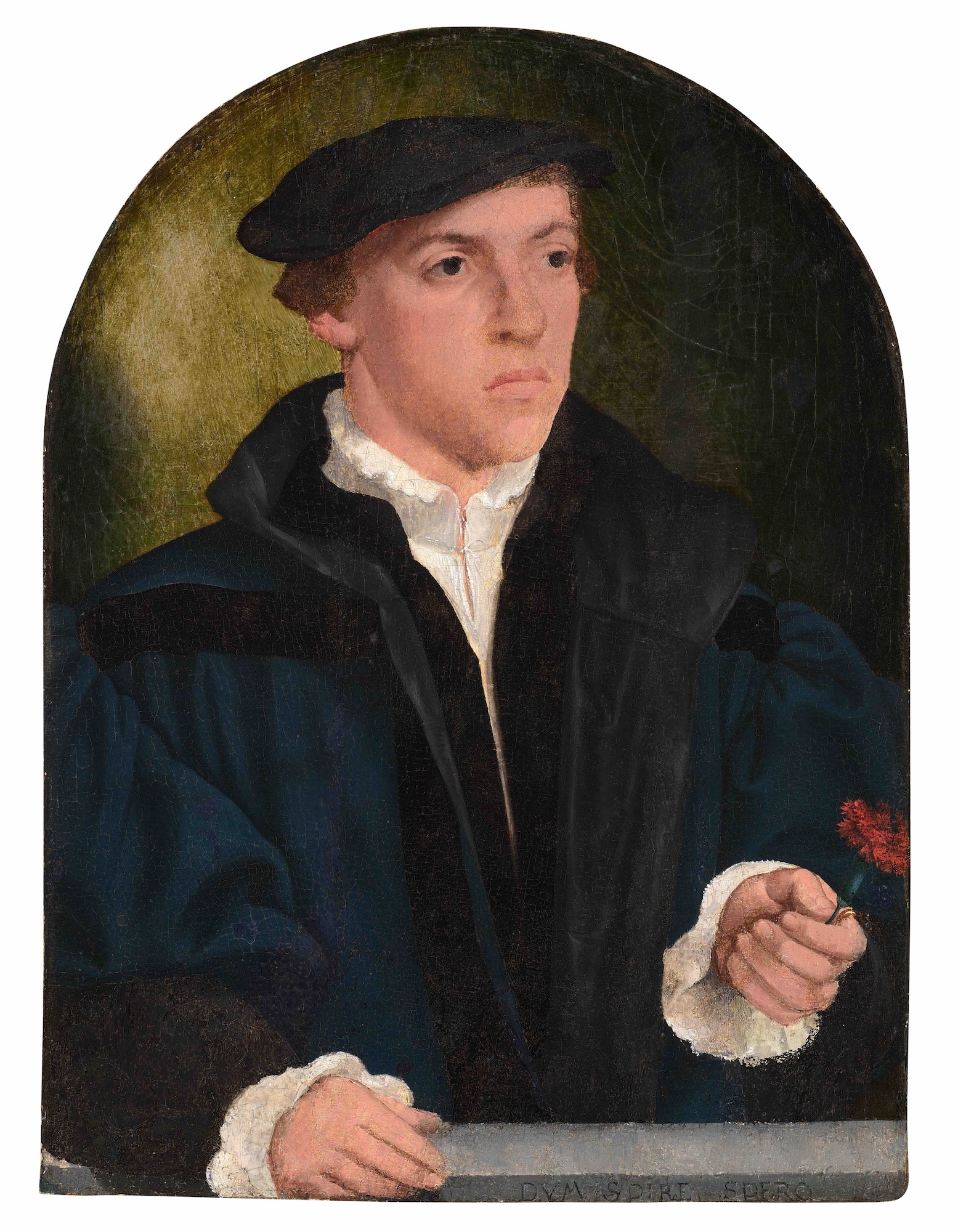
Unlike his contemporaries Lucas Cranach the Elder and Hans Holbein, Barthel Bruyn did not work for a princely court. Keen to paint portraits that were close to reality rather than idealised images, Bruyn rapidly became the accredited portraitist of the haute bourgeoisie and notables of Cologne. Attaching great importance to the character of each of his models, Bruyn succeeded in revealing the intimate details of members of 16th-century German high society. His portraits not only showed faces, but placed equal importance on fabrics, jewellery and hands, thus providing clues as to the identity and rank of the person depicted.
His works were initially influenced by Jan Joest of Kalkar and Joos van Cleve, before being further influenced by the Dutch masters Jan van Scorel (1495-1562) and Maarten van Heemskerck (1498-1575). The latter travelled to Italy and adopted a more ornamental, Italianate style. In 1529, Bruyn received a commission for an altarpiece from the chapter of the Church of St. Victor in Xanten, which he finished in 1534/36. The majority of his altar paintings, which he painted or were painted by his large workshop that his son Barthel the Younger later took over, can be found in Xanten and Essen. Barthel Bruyn the Elder can be considered Cologne's first Renaissance portrait painter, and the representative of a pictorial tradition that developed in the city between the 15th and 16th centuries.
